This product is intended as a research chemical only. This designation allows the use of research chemicals strictly for in vitro (out of the body) testing, and laboratory experimentation only. Any introduction into human or animal bodies is strictly forbidden by law. This product is not a drug, and may not be misbranded, mishandled, or misused as a drug.
Research
Blend Overview
Research reveals that BPC-157 and TB-500 may have complementary actions in wound repair biology. Although both peptides have been studied in the context of healing and inflammation control, they appear to influence each other through different biochemical “entry points”. This creates a plausible rationale for synergy when the two are evaluated together in controlled laboratory models.
From a research-design standpoint, the key hypothesis is not that the peptides duplicate each other’s effects, but that they may support differential rate-limiting steps in repair —such as cellular recruitment to the injury site, fibroblast function, extracellular matrix organization, angiogenesis, and the transition from inflammatory signaling to remodeling. The sections below organize the mechanistic rationale into a structural framework to support experimental planning and outcome measurement.
Blend Biochemical Characteristics
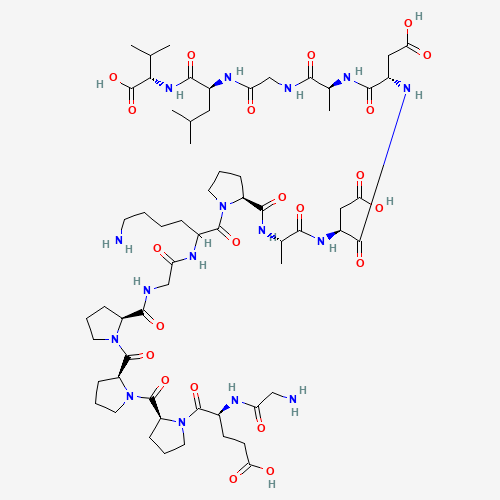
BPC-157 is a pentadecapeptide investigated in multiple tissue injury models. In published tendon-focused work, BPC-157 has been associated with cellular survival and migration processes relevant to healing, including changes that support fibroblast activity and outgrowth in damaged tissue.
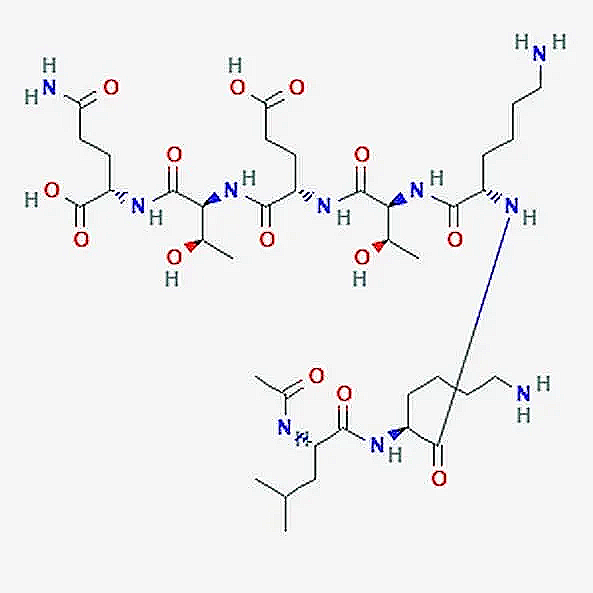
TB-500 is a derivative of Thymosin Beta-4-related peptide. It is studied in the context of tissue repair, inflammation, and fibrosis biology. Thymosin beta-4 is well known for its relationship to actin dynamics, and cell movement, and the broader literature describes roles in wound healing and angiogenesis (including hair follicle related biology in certain models). In fibrosis-oriented contexts, thymosin beta-4 has also been discussed as a regulator of pathways tied to tissue remodeling.
A practical biochemical framing for combined research is: BPC-157 is often discussed in terms of gene-level of signalling-level modulation of repair programs in injured tissues, while TB-500 (as thymosin beta-4-related peptide) is commonly framed around actin-related cell motility and broader repair signaling. This difference supports a testable synergy concept rather than simple redundancy.
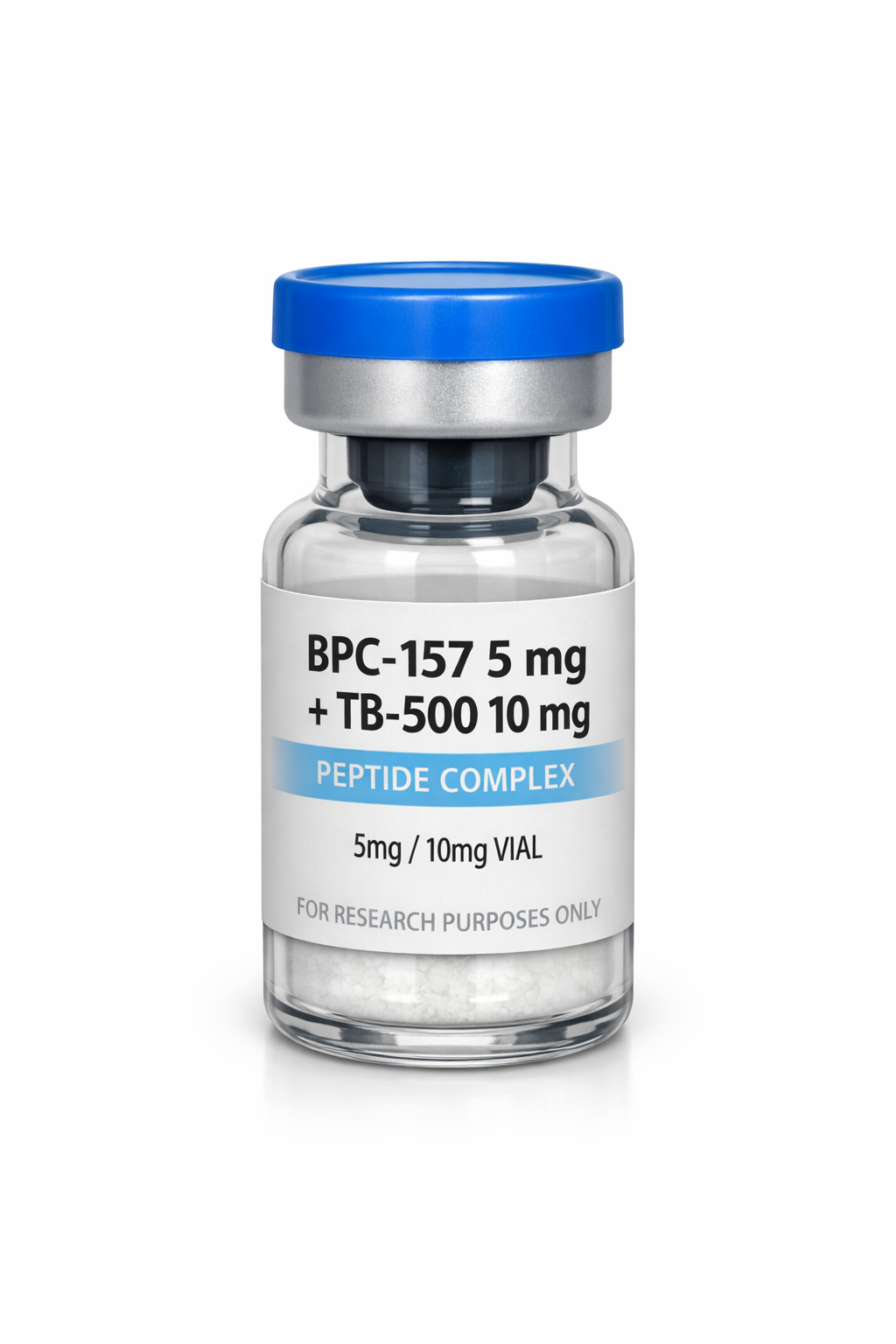 Image 1 of 1