Naturopathic Care for Mental Health & Mood Disorders
Dr. Kirk works with complex mood and psychiatric conditions, including bipolar spectrum disorders, treatment-resistant depression, anxiety disorders, OCD, and chronic emotional dysregulation. Many patients seeking care have longstanding symptoms, medication sensitivity, incomplete response to conventional treatment, or overlapping neurologic and physiologic concerns.
Mood symptoms are rarely isolated from the rest of the body. Sleep disruption, autonomic dysfunction, chronic inflammation, hormonal imbalance, sensory hypersensitivity, and metabolic dysfunction can all influence emotional regulation and psychiatric stability. Rather than focusing solely on diagnosis or symptom suppression, treatment emphasizes understanding the broader physiologic patterns contributing to persistent symptoms.
Care is individualized, medically informed, and designed for patients seeking a comprehensive and systems-based approach to mental health. Many individuals pursue this work after years of partial improvement, medication side effects, or difficulty achieving long-term stability through conventional care alone.
“Mood disorders often reflect broader patterns of nervous system dysregulation, physiologic stress, sleep disruption, and impaired emotional resilience.”
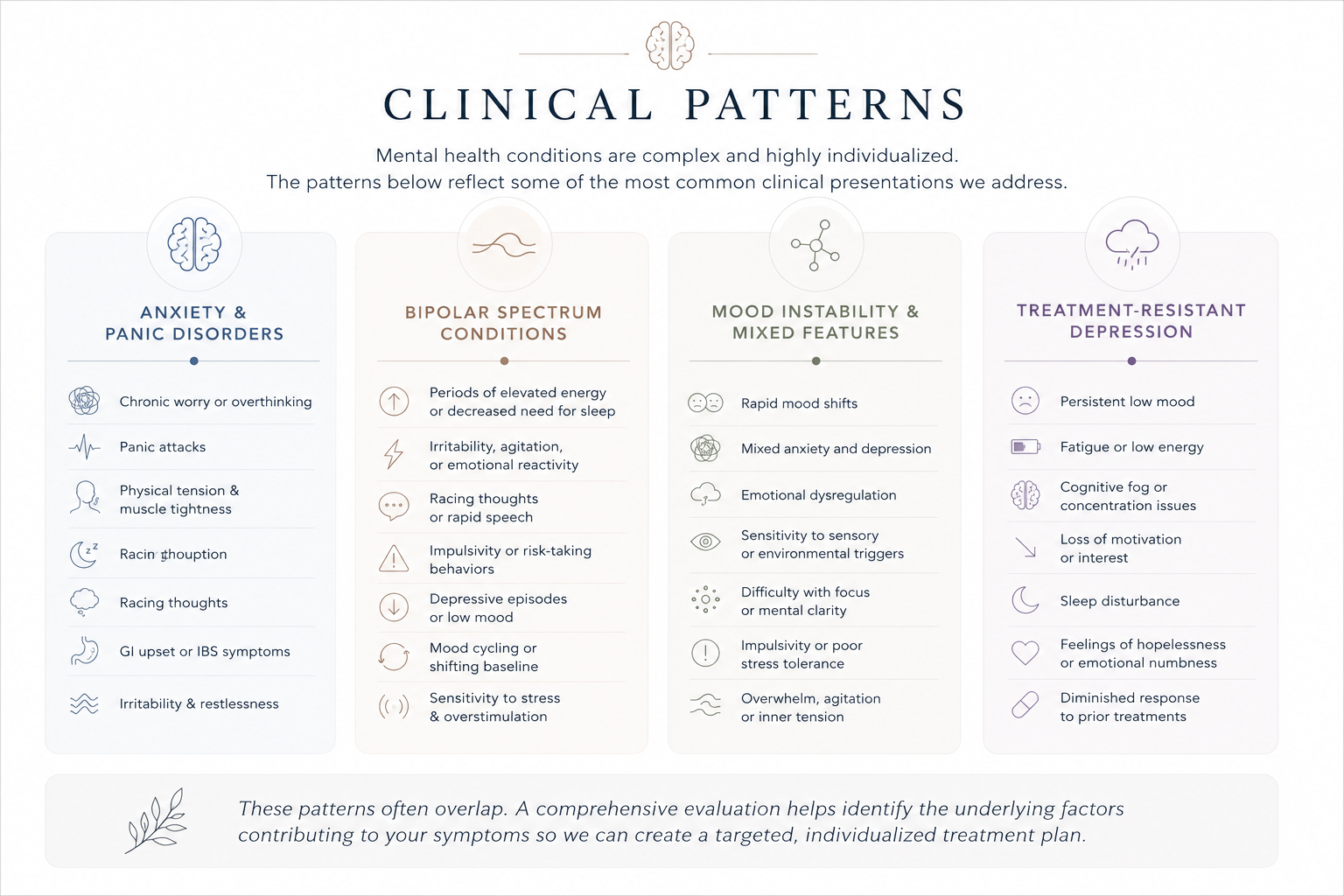

Anxiety & Panic Disorders
Anxiety disorders often involve far more than excessive worry alone. Many individuals experience chronic hypervigilance, autonomic nervous system activation, muscle tension, insomnia, gastrointestinal symptoms, sensory overstimulation, and persistent physiologic stress responses. Panic symptoms may emerge suddenly or build gradually over time through cumulative nervous system dysregulation.
Conventional treatment frequently emphasizes psychotherapy and SSRI medications. While these approaches can be helpful, some patients continue to experience persistent symptoms, medication intolerance, emotional blunting, or incomplete relief. Integrative care seeks to better understand the physiologic contributors influencing chronic anxiety states.
Treatment may include evaluation of sleep quality, autonomic regulation, inflammation, nutrient status, stress physiology, and nervous system resilience. Individualized treatment plans often incorporate the latest in targeted orthomolecular supplements, lifestyle medicine, nutritional support, physical medicine, and homeopathic remedies when appropriate.
Learn more about Anxiety here →
Bipolar Spectrum Conditions
Bipolar spectrum conditions exist on a continuum and may include bipolar I disorder, bipolar II disorder, cyclothymia, mixed states, emotional reactivity, and fluctuating mood instability. Symptoms often involve periods of increased energy, decreased need for sleep, impulsivity, agitation, irritability, or depression that may alternate over time.
Many patients seeking care have experienced multiple diagnoses, medication sensitivity, or persistent instability despite prior treatment. Others struggle with chronic nervous system hyperreactivity that contributes to emotional volatility, overstimulation, sleep disruption, and impaired stress tolerance.
Integrative treatment focuses on improving nervous system regulation, sleep stability, emotional resilience, and physiologic balance while supporting long-term mood stabilization. Care is collaborative when appropriate, particularly for individuals currently using psychiatric medications.
Learn more about Bipolar Spectrum Conditions here →
Mood Instability & Mixed Features
Mood instability is not always easily categorized within traditional psychiatric labels. Some individuals experience rapidly shifting emotional states, periods of agitation combined with depression, heightened sensory sensitivity, impulsivity, cognitive fog, or chronic physiologic overstimulation that fluctuates over time.
These mixed presentations often involve overlapping neurologic, autonomic, endocrine, and inflammatory contributors. Sleep disruption, chronic stress physiology, attentional dysregulation, trauma-related nervous system activation, and metabolic dysfunction may all influence emotional regulation and psychiatric resilience.
Treatment emphasizes identifying destabilizing patterns while supporting long-term nervous system regulation and improved daily functioning through an individualized and systems-based approach. I’ve created a list of Foundational Nutrients for Mood Stability here.
Treatment-Resistant Depression
Treatment-resistant depression often involves more than neurotransmitter imbalance alone. Many individuals experience persistent fatigue, cognitive slowing, emotional blunting, impaired stress tolerance, chronic inflammation, sleep disruption, hormonal imbalance, or autonomic dysfunction that contribute to ongoing depressive symptoms.
Some patients report diminishing benefit from medications over time or difficulty tolerating medication side effects. Others continue to experience impaired motivation, reduced emotional resilience, or poor overall function despite multiple treatment approaches.
Integrative care may include assessment of inflammatory burden, sleep quality, metabolic health, nutritional status, stress physiology, gastrointestinal function, and nervous system regulation. Treatment plans are individualized and designed to support long-term emotional stability, resilience, and overall function.
Learn more about Treatment-Resistant Depression here →
Obsessive-Compulsive Disorder
OCD involves unwanted, recurring thoughts, images, or impulses and repetitive behaviors or mental acts performed to reduce distress or uncertainty. OCD can take many forms and may occur alongside anxiety, depression, or other mental-health symptoms.
Learn more about OCD here →
-
Naturopathic and integrative medicine may help support individuals experiencing chronic anxiety, bipolar spectrum conditions, mood instability, and treatment-resistant depression. Care focuses on identifying underlying physiologic contributors that may influence emotional regulation, nervous system stability, sleep quality, and overall psychiatric function.
-
Yes. Many patients continue working with psychiatrists or prescribing clinicians while pursuing integrative care. Treatment is collaborative when appropriate, particularly for individuals using psychiatric medications or requiring ongoing medication management.
-
Many individuals seeking care have experienced incomplete improvement despite multiple prior treatment approaches. Integrative medicine may offer additional avenues for investigation, including sleep dysfunction, chronic inflammation, metabolic imbalance, autonomic dysregulation, gastrointestinal health, and nervous system resilience.
-
Yes. Mood disorders frequently overlap with fatigue, cognitive fog, sensory hypersensitivity, autonomic dysfunction, sleep disruption, and chronic physiologic stress responses. These overlapping patterns are often important to understanding long-term emotional and neurologic health.
-
This practice is best suited for people with chronic, complex, or treatment-resistant symptoms seeking a comprehensive and individualized approach to care. Many patients are looking to improve long-term symptoms that have been incompletely treated by the conventional route. This practice helps people willing to dig deeper into root cause problems, as opposed to taking a daily medication indefinitely.