Naturopathic Care for Neurologic & Cognitive Conditions
Dr. David Kirk works with patients seeking help with complex neurologic conditions, including cognitive decline, memory impairment, and movement disorders. Many of his patients have been told that their symptoms are inherently progressive, and that they should just accept lifelong medications to mask their symptoms. He specializes in complex, non-straightforward cases.
Neurologic conditions rarely exist in isolation. I’m no longer surprised when I uncover a low-grade chronic infection that is contributing to the overall symptom picture. Bacteria like Strep. Viruses like EBV. These all have well-documented and accepted contributions to neurologic diagnoses. Inflammation, metabolic dysfunction, stress physiology, and environmental contaminants all affect the nervous system in complex and notable ways. The body should be treated as a whole, and every possibility should be examined, to assess for any obstacle to cure that may exist.
Treatment begins with this process. First, remove any obstacle to cure. Second, provide a gentle healing stimulus. Dr. Kirk evaluates interconnected systems. He does not just provide a diagnosis, followed by a prescription to be picked up at the pharmacy.
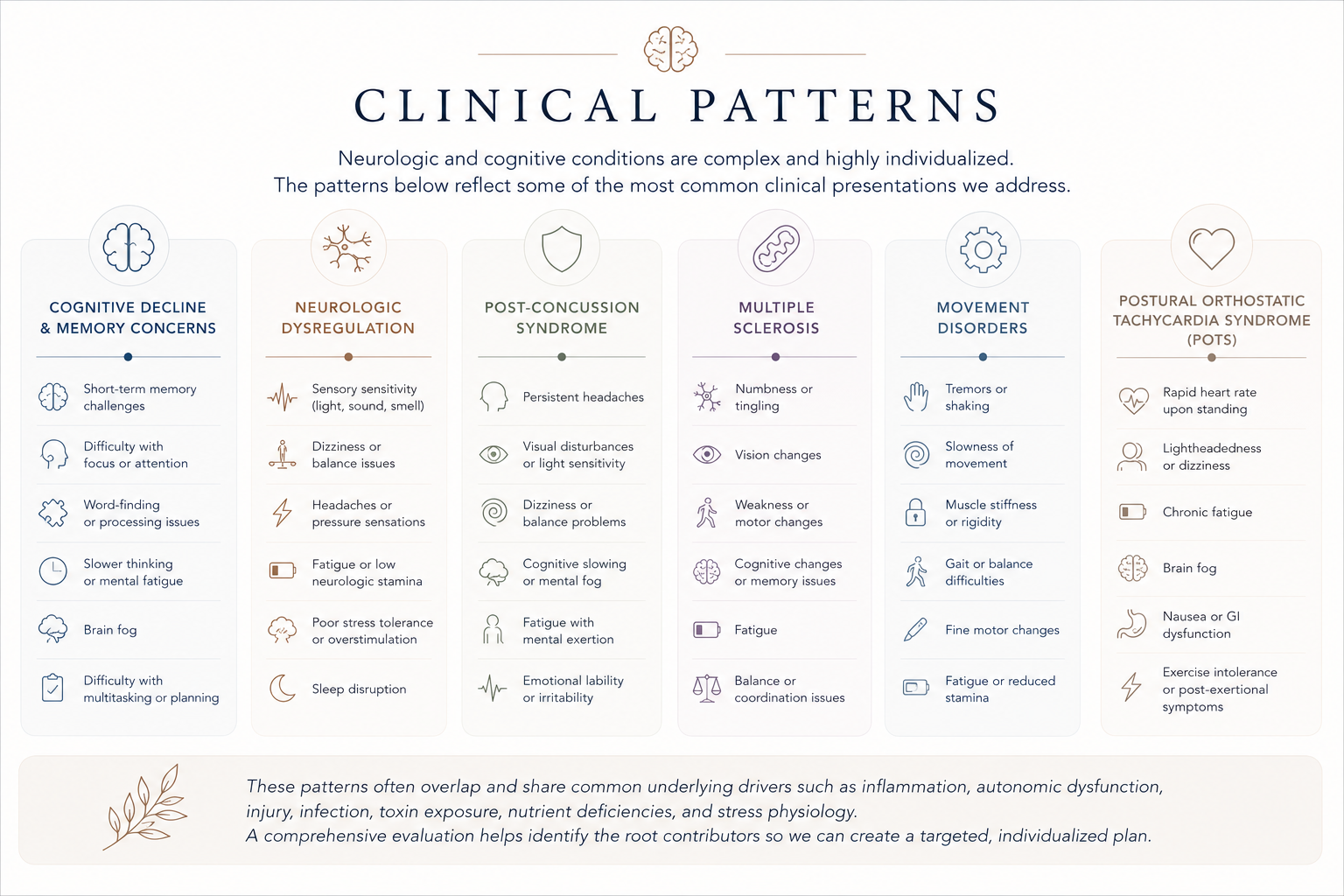
Cognitive Decline
Cognitive decline involves a noticeable reduction in memory, thinking, or reasoning skills beyond normal aging, ranging from Mild Cognitive Impairment (MCI) to dementia. Symptoms include memory loss, confusion, and difficulty with daily tasks. Causes range from Alzheimer’s and neurodegenerative diseases to treatable factors like vitamin deficiencies, depression, or sleep apnea.
Conventional treatment typically begins with medications used to manage symptoms, without actually addressing the underlying cause. These include cholinesterase inhibitors like Donepezil, and glutamate regulators like Memantine. While these pharmaceuticals may provide symptom relief, the disease typically progresses.
Naturopathic treatment has a wealth of options. Homeopathic medicine aims to address the imbalance that lies in each individual. Nutraceuticals that are currently being researched to reduce tau proteins and amyloid plaques include Lion’s mane mushrooms. Acetyl-l-carnitine supports mitochondrial function in the brain.
Multiple Sclerosis
MS is an autoimmune condition where the body begins to attack the protective insulation of neurons. Early symptoms begin with vision impairment, like double vision, or partial vision loss. Tingling, numbness, and even complete paralysis of limbs is often a sign that the condition is progressing. Conventional treatment uses Disease Modifying Therapy drugs like Ocrevus twice yearly in an attempt to deplete the body of CD20+ cells, which are part of the body’s immune system. A high-dose IV-administered corticosteroid like Solu-medrol is sometimes combined during acute attacks of symptoms during MS, although it is considered a “necessary evil”, due to its high side effect profile. Finally, injections of Benadryl are added in to help alleviate the burning and side effects of the Ocrevus, although Benadryl has been linked to cognitive decline. Tylenol is frequently taken to manage the headaches and muscle pains associated with MS.
Nearly every MS patient has a prior history of Epstein Barr Virus infection, the same virus that causes “Mono.” It appears that in genetically-susceptible individuals, the virus initiates the autoimmune response.
Homeopathic medicine aims to find a single substance found in nature, that takes into account the physical, mental, and emotional symptoms of the individual. Nutraceuticals like B-12 are imperative for nerve protection. Unfortunately, long-term use of Solu-medrol and Tylenol has been shown to deplete B vitamins through oxidative stress and increased demand, so it is wise to discuss this with your provider to make sure that your levels are optimal.
Parkinson’s Disease
PD is a movement disorder that causes tremors, muscle stiffness, slow or decreased movement, or loss of balance. It may also cause a reduced sense of smell, constipation, acting out dreams and a decline in thinking skills. PD begins when toxic Lewy Bodies, clumps of misfolded proteins, accumulate inside neurons. Mitochondria then break down, causing a reduction in cell energy. To compensate, the cells in the brain that produce dopamine overwork themselves, eventually burning out, and dying, leading to an overall reduction in dopamine.
Conventional treatment aims to increase dopamine, but has not been able to slow the progression of the condition. The disease continues to progress, and medication effectiveness often plateaus over time.
A few progressive PD providers believe that diet and exercise can delay the progression of the condition. The MIND diet (Mediterranean-DASH Intervention for Neurodegenerative Delay) is a brain-healthy eating pattern. It emphasizes leafy greens, berries, nuts, olive oil, and whole grains while limiting red meat, butter, and sweets.
Naturopathic care takes it one step forward, and looks at supporting the nervous system. Citocoline is a supplement that has been shown in the research to reduce the dosage of pharmaceuticals. Homeopathic medicine aims to correct the imbalance that exists in the individual.
Lyme
Lyme comes from a bacteria that is transmitted to the bloodstream by either a deer or mouse tick. The bacteria is called Borrelia burgdorferi. If left untreated, it can spread to the heart, joints, and nervous system. If you get bit, it is best to save the tick, and test it. There is a service available by UMass called tickreport.com.
Conventional treatment is immediate antibiotics. Typically Doxocycline 100mg twice daily for 30 days. More chronic cases of Lyme typically receive bi-weekly injections of Bicillin for several weeks. If still positive, IV antibiotics are typically used.
Naturopathic treatment works on addressing the underlying terrain. On the most superficial level, infrared sauna can help to eliminate bacterial byproducts. There are several anti-microbial herbs that have been researched by Johns Hopkins University, including Japanese Knotweed, Sweet Wormwood, and Chinese Skullcap. Homeopathic medicine should also be a consideration.
Postural Orthostatic Tachycardia Syndrome
POTS is a form of autonomic nervous system dysfunction characterized by an excessive increase in heart rate upon standing. Common symptoms include severe fatigue, dizziness, brain fog, palpitations, and, in some cases, fainting, which can significantly impact daily functioning.
Conventional care typically begins with strategies aimed at improving blood volume and circulation, including increased fluid and salt intake. When needed, medications such as beta-blockers, ivabradine, or fludrocortisone may be used to help regulate heart rate and support symptom management.
Naturopathic care for POTS expands beyond symptom stabilization to support overall autonomic nervous system regulation and underlying contributors to dysregulation. This may include nutritional and electrolyte support, vagal nerve-informed approaches, parasympathetic activation, and individualized integrative therapies which include homeopathic remedies. The goal of care is to improve overall autonomic stability, reduce symptom burden, and support functional recovery over time through a personalized, systems-based approach.
FAQs
-
Yes. Naturopathic and integrative medicine may help support patients experiencing cognitive decline, memory impairment, brain fog, or reduced mental clarity. Care often focuses on identifying contributing factors such as inflammation, metabolic dysfunction, nutrient deficiencies, sleep disruption, chronic stress physiology, and vascular health. Treatment is individualized and may include nutritional support, lifestyle interventions, physical medicine, and targeted integrative therapies aimed at supporting overall brain function and quality of life.
-
A systems-based approach to neurologic conditions evaluates the interconnected factors that influence brain and nervous system function rather than focusing solely on diagnosis or symptom suppression. This may include assessment of inflammation, metabolic health, autonomic nervous system regulation, stress physiology, nutrient status, sleep quality, and environmental contributors. The goal is to identify underlying imbalances that may influence neurologic symptoms and long-term function.
-
Yes. Integrative and naturopathic care may help support patients with Parkinson’s disease, multiple sclerosis, and other chronic neurologic conditions alongside conventional medical treatment. Care often focuses on improving energy, mobility, cognitive function, nervous system resilience, and overall quality of life. Treatment plans are individualized and may include nutritional strategies, physical medicine, stress regulation, and targeted supportive therapies depending on the patient’s condition and goals.
-
Neurologic symptoms frequently overlap with fatigue, anxiety, and brain fog because the brain, autonomic nervous system, endocrine system, and immune system are closely interconnected. Chronic inflammation, stress physiology, sleep disruption, autonomic dysfunction, and metabolic imbalance can affect both neurologic and emotional regulation simultaneously. As a result, patients with neurologic conditions often experience cognitive, physical, and mood-related symptoms together.
-
This type of neurologic care is best suited for adults with chronic, complex, or treatment-resistant symptoms who are seeking a more comprehensive and individualized approach. Many patients have experienced incomplete relief through conventional care alone or are looking to better understand underlying contributors to their condition. Care is typically most appropriate for individuals who are motivated to engage in a thoughtful, long-term process focused on improving function, stability, and quality of life.