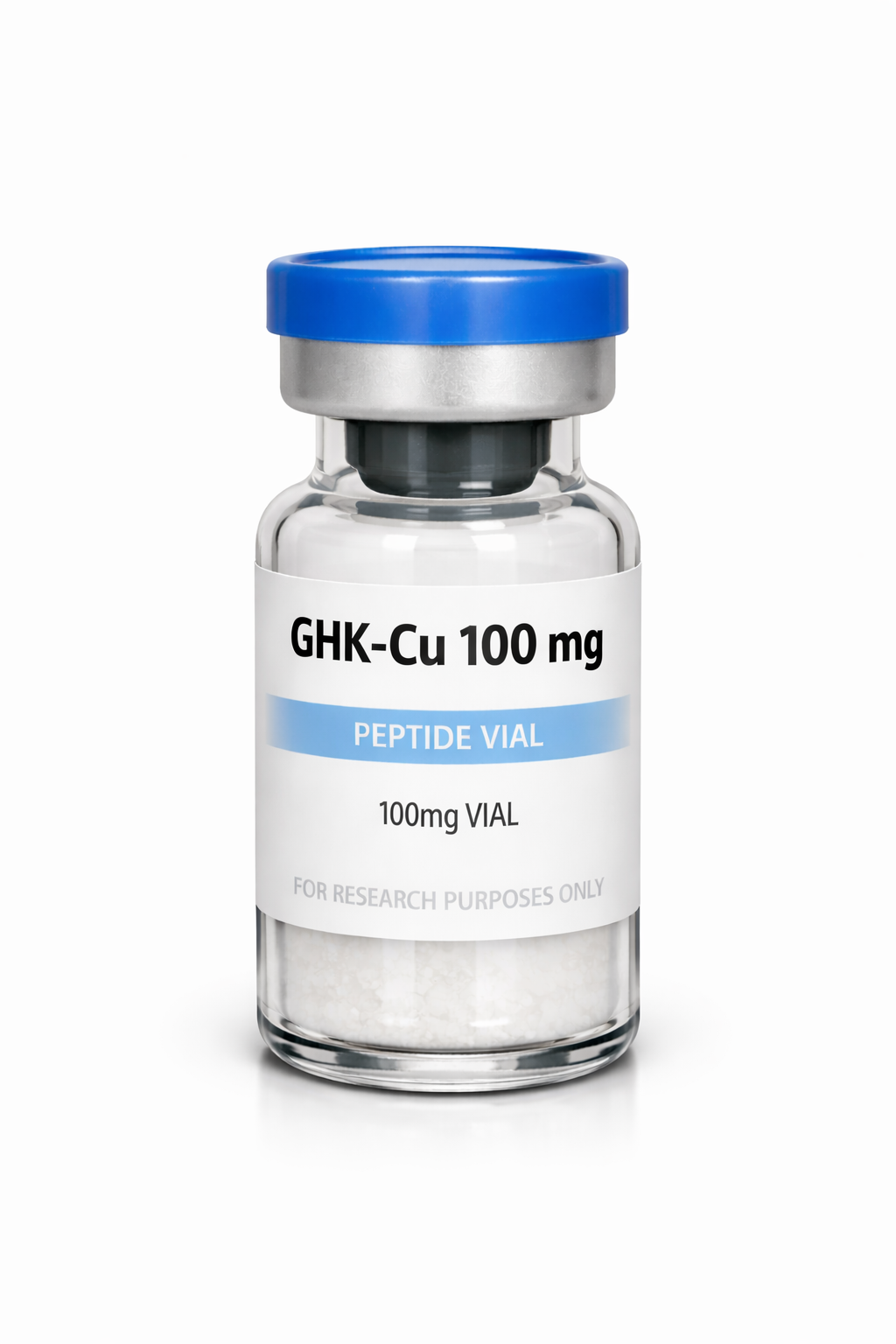
 Image 1 of 1
Several copper-peptide complexes occur naturally. In human plasma, the level of GHK-Cu is about 200 ng/ml at age 20. By the age of 60, the level drops to 80 ng/ml. In humans, GHK-Cu is proposed to promote wound healing, attraction of immune cells, antioxidant and anti-inflammatory effects, stimulation of collagen and glycosaminoglycan synthesis in skin fibroblasts and promotion of blood vessels growth. Recent studies revealed its ability to modulate expression of a large number of human genes. Synthetic GHK-Cu is used in cosmetics as a reparative and anti-aging ingredient.
Products will arrive in a lyophilized (powder) form for maximum stability
This product is intended as a research chemical only. This designation allows the use of research chemicals strictly for in vitro (out of the body) testing, and laboratory experimentation only. Any introduction into human or animal bodies is strictly forbidden by law. This product is not a drug, and may not be misbranded, mishandled, or misused as a drug.
Research
Skin Regeneration
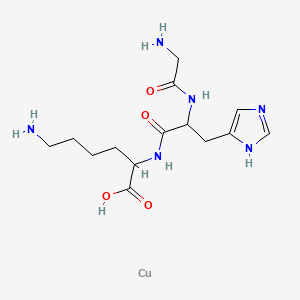
GHK (glycyl-L-histidyl-L-lysine) is a naturally occuring tripeptide with potential healing properties. GHK-Cu stimulates glycosaminoglycans (GAGs), and this stimulation may be one of the phenomenons implicated in the wound healing properties of the peptide. GAGs are essential, naturally occurring sugar-based molecules in the skin that provide intense hydration, structural integrity, and elasticity. They act as potent humectants, holding up to 1,000 times their weight in water to plump the skin and reduce wrinkles. As we age, GAG levels decrease, making them key targets in anti-aging skincare for restoring hydration and repairing the skin barrier. [1]
Anti-Aging Peptide
GHK (glycyl-L-histidyl-L-lysine) is a naturally occurring peptide found in human serum with levels averaging 200 ng/ml at age 20 but declining to an average of 80 ng/ml by age 60. The molecule has a very high affinity for copper and forms the chelate GHK-Cu. The peptide as well as its Cu (II) chelate have anti-inflammatory and tissue remodeling properties. GHK-Cu has been shown to promote skin remodeling, wound healing and regeneration, and has prominent antioxidant and anti-inflammatory effects in in vitro and in vivo studies. In addition, preliminary observations suggest GHK can partially reverse cognitive impairment in aging mice by targeting anti-inflammatory and epigenetic pathways. [2]
Anti-Cancer Potential
GHK stimulates gene expression for DNA Repair genes (47 UP, 5 DOWN). This suggests a positive effect on DNA repair systems. Since one of the effects of radiation is DNA damage, stimulation of DNA repair genes may explain the observed positive effects on irradiated fibroblasts. We can hypothesize that some of the mechanisms behind beneficial effects on aging skin’s condition, described above, can be also explained through increased DNA repair genes. [3]