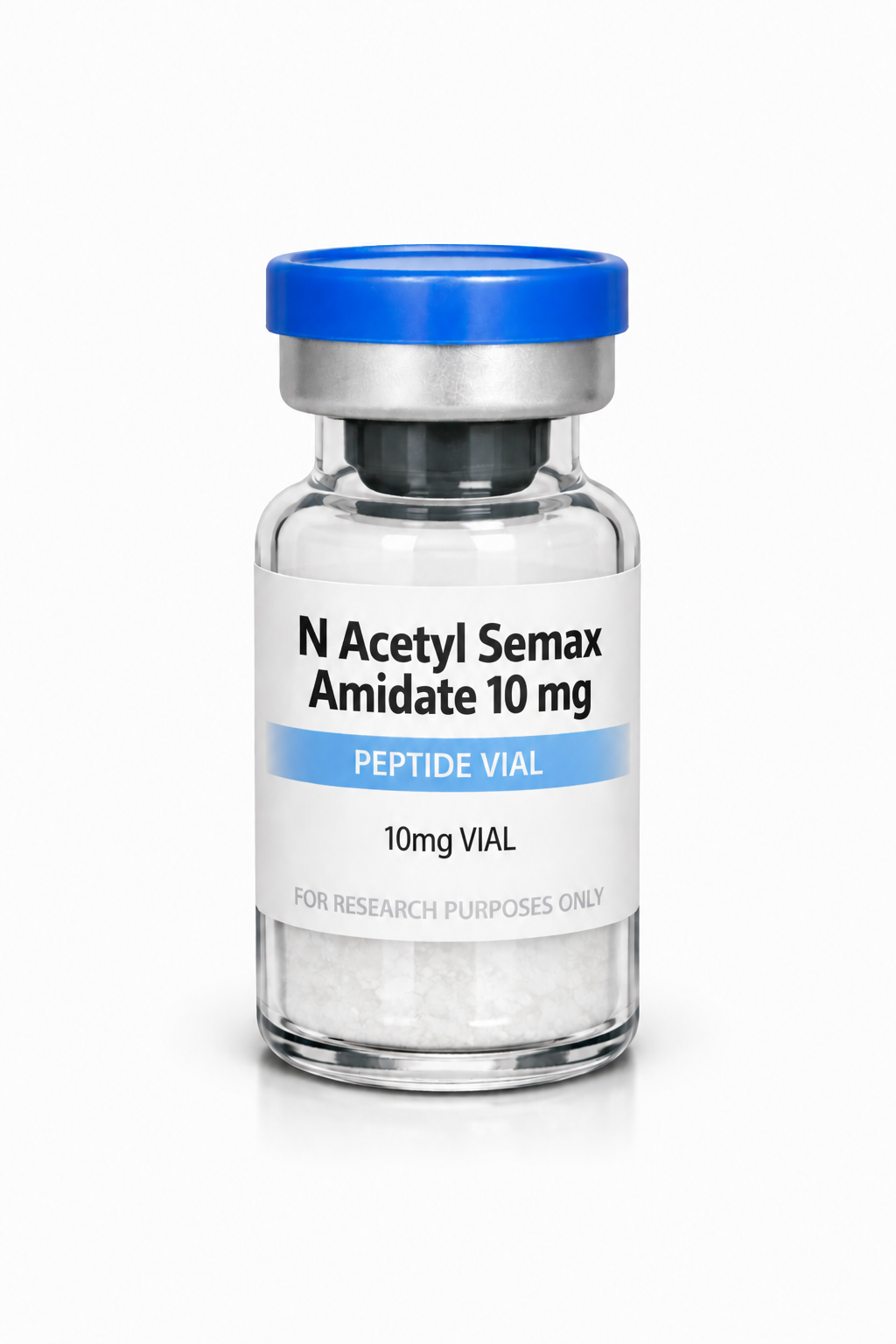
N Acetyl Semax

$68.00

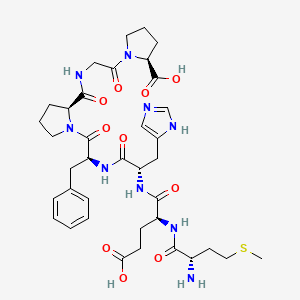
Semax is a synthetic heptapeptide analog of adrenocorticotropic hormone (ACTH 4-10 fragment) designed to have increased stability and penetration into the central nervous system. The sequence is Met-Glu-His-Phe-Pro-Gly-Pro with N-terminal acetylation. Semax is studied in laboratory settings for its potential effects on neurotrophic factor expression, neurotransmitter modulation, neuroprotection, cognitive processes, and adaptation to stress or ischemic conditions.

Semax is a synthetic heptapeptide analog of adrenocorticotropic hormone (ACTH 4-10 fragment) designed to have increased stability and penetration into the central nervous system. The sequence is Met-Glu-His-Phe-Pro-Gly-Pro with N-terminal acetylation. Semax is studied in laboratory settings for its potential effects on neurotrophic factor expression, neurotransmitter modulation, neuroprotection, cognitive processes, and adaptation to stress or ischemic conditions.

In experimental models, Semax modulates various neurotransmitter systems. It raises brain-derived neurotrophic factor (BDNF) and nerve growth factor (NGF) expression in the hippocampal and cortical neurons. It boosts dopamine and serotonin turnover in the striatum and frontal cortex, supports stress resilience by modulating enkephalin and dynorphin systems, induces tyrosine hydroxylase expression, and increases the density of dopamine D1/D2 receptors in specific brain regions. Likewise, Semax has shown anti-inflammatory effects through the suppression of IL-6 and TNF-α production in neuroinflammatory models, as well as protection against oxidative stress and excitotoxicity in neuronal cultures. These actions are investigated through research on neuroprotection, cognition, memory consolidation, and adaptation to stress or ischemic conditions.

Products will arrive in a lyophilized (powder) form for maximum stability

This product is intended as a research chemical only. This designation allows the use of research chemicals strictly for in vitro (out of the body) testing, and laboratory experimentation only. Any introduction into human or animal bodies is strictly forbidden by law. This product is not a drug, and may not be misbranded, mishandled, or misused as a drug.
Research

Neuroprotective Effects in Ischemic Models

Focal cerebral ischemia in rats under Semax administration at 50–250 µg/kg i.p. led to dose-dependent reductions in infarct volume (30%–50%), improved neurological scores, and increased BDNF and NGF expression in peri-infarct brain areas. These effects correlated with decreased neuronal apoptotic index and increased angiogenesis in the penumbra zone. [1]

Cognitive and Memory Enhancement

In learning and memory paradigms (Morris water maze, passive avoidance), Semax enhanced acquisition and retention, particularly under ischemic or toxic conditions. Doses between 100–300 µg/kg improved performance compared to controls in both young and aged rats, correlating with increased BDNF levels in the hippocampus and frontal cortex. [2]

Stress and Anxiety-Related Behavior

In chronic stress models, Semax-treated animals exhibited normalized anxiety-like behavior in the elevated plus-maze and open-field test. It restored dopamine and serotonin levels in brain regions affected by immobilization stress and mitigated stress-induced immune suppression. [3]

Neurochemical and Immunomodulatory Actions

Semax elevated dopamine and serotonin turnover in the striatum and frontal cortex, increased tyrosine hydroxylase activity, and altered D1/D2 receptor density. In glial cell cultures, it decreased proinflammatory cytokines (IL-6 and TNF-α) while supporting anti-inflammatory profiles. [4]

In Vitro Neuroprotection

In primary neuronal cultures, Semax demonstrated protection against glutamate excitotoxicity and oxidative damage, maintained mitochondrial function, and limited caspase activation. Semax remains investigational. There are no large-scale human studies, and it is not approved for therapeutic use. [5]